Code All Services Correctly on TDA Revision/Replacement Coding, Part 1
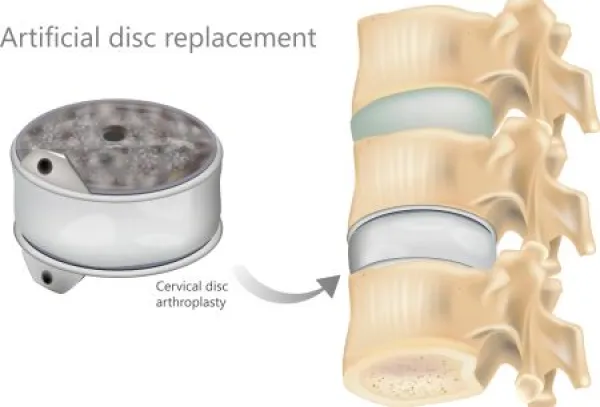
Check with payer for conservative therapies they might require before surgery. To determine if a patient requires a revision or replacement of a total disc arthroplasty (TDA), the surgeon will need to perform tests to confirm that a revision/replacement is necessary. They’ll also have to try more conservative treatments before most payers will approve a complex revision/replacement surgery. As a coder, your job is to make sure you document and code all these services correctly. Check out part 1 of our two-part series designed to help you get a handle on coding for spinal prosthetic device procedures. Surgeon Performs History and Exam First To determine if a patient requires a revision or replacement of a TDA, the physician evaluates clinical evaluation findings, targeted imaging modalities, and diagnostic tests. The process begins with an in-depth clinical history and physical examination. The physician focuses on specific red flags and patterns of clinical failure. These red flags include the following: You’ll code these services with the appropriate evaluation and management (E/M) code depending on encounter specifics. Imaging Tests Pinpoint Revision/Replacement Spot Imaging is crucial to definitively confirm that the failure of the previously placed device needs a revision or replacement. The tests the surgeon will use to decide on revision/replacement include the following: Rule out Other Causes Before Surgery Before proceeding to a highly complex revision surgery, the surgeon must systematically rule out other pain generators and underlying pathologies that might be causing the patient’s symptoms. The surgeon could perform these services for the rule out process: Keep in mind that most payers require six to 12 weeks of conservative therapy via treatments such as physical therapy (PT), nonsteroidal anti-inflammatory drugs (NSAIDs), or epidural steroid injections to determine the pain location/cause before proceeding with a major surgery. Consider This Clinical Example The case: A 48-year-old patient underwent a single-level cervical TDA at C5-C6 two years ago for degenerative disc disease and radiculopathy. The patient did well initially, with resolution of their arm pain. However, over the last six months, they developed progressive, deep mechanical posterior neck pain, recurrent radiating left-sided arm numbness, and decreased range of motion. Orders: Imaging via X-rays, CT, and MRI reveals that the superior component of the artificial disc has subsided (sank approximately 3 mm) into the C5 vertebral body, without evidence of bone degeneration. Surgeon actions: The surgeon concludes that the patient’s acute radiculopathy and mechanical failure are driven strictly by the structural malposition/migration of the implant rather than biological bone failure. Because the surrounding bone stock remains perfectly robust, dense, and uncompromised, the segment does not require permanent fusion. The patient remains an ideal candidate for motion-preservation therapy. The surgeon decides to perform a revision to explant the migrated device and insert a new, properly centered cervical artificial disc. The patient agrees to the procedure and will schedule with the front office. Coding: On the claim, you’ll report the following: (Be on the lookout for part 2 of this story in Revenue Cycle Insider next month, which will feature documentation strategies and a real-world example of a TDA replacement/revision.) Jessica Sullivan, CPC, COBGC, COSC, Consultant,
Pinnacle Enterprise Consulting Services (PERCS)